
Best Fracture Treatment in Pune for Quick Recovery
A bone injury can disrupt daily life and cause stress. Seeking professional medical attention right away helps your body heal correctly. Choosing Fracture Treatment in Pune gives you access to advanced diagnostic tools and expert orthopedic surgeons.
Many patients delay care or rely on home remedies. This choice can cause long-term complications or poor bone alignment. With quality fracture care pune, you have a clear path to full recovery.
Our guide shows how modern medical standards help patients regain mobility faster. Accurate diagnosis and personalized rehabilitation plans support better healing. Reliable fracture treatment in pune keeps your health central throughout recovery.
Key Takeaways
- Immediate medical evaluation prevents long-term bone complications.
- Professional orthopedic care offers faster and safer recovery timelines.
- Advanced diagnostic tools are essential for precise injury assessment.
- Personalized rehabilitation plans help restore full range of motion.
- Avoiding self-directed care is vital for successful bone healing.
Fracture Treatment in Pune: What Patients Should Expect
A bone injury needs quick, clear action to protect your long-term mobility. During pune fracture treatment, doctors assess and stabilize your condition. Preparing for your visit helps your recovery begin safely.
Common Fracture Types Treated by Pune Orthopedic Specialists
Pune orthopedic experts treat many bone injuries, from small hairline cracks to complex breaks. Simple fractures leave the bone aligned, while compound fractures break through the skin. A qualified fracture specialist pune studies your injury and chooses the best way to stabilize it.
When a Suspected Fracture Requires Emergency Care
Some injuries need emergency care instead of a scheduled appointment. Seek help at once for visible deformity, inability to bear weight, or extreme swelling. Prompt intervention matters after major trauma or when bone pierces the skin, because infection risk is high.
How Prompt Treatment Supports Safer, Faster Healing
Early medical attention supports a successful recovery. Timely care keeps bones in the correct position and prevents further displacement. It also lowers long-term risks and helps you return to daily activities with greater confidence.
Warning Signs of Nerve, Blood Vessel, or Soft-Tissue Damage
Some symptoms show that the injury affects more than bone. Watch for persistent numbness, tingling, or a limb that feels cold. These signs may mean nerve or blood vessel damage, requiring urgent care from a fracture specialist pune.
Why Patients Should Avoid Self-Adjusting or Delaying Immobilization
It is never advisable to attempt to “pop” or adjust a bone yourself. Wrong handling can cause serious nerve damage or worsen soft-tissue injuries, causing a longer recovery. Choose professional pune fracture treatment so your bones heal safely and effectively.
Accurate Diagnosis at a Fracture Clinic in Pune
Successful recovery starts with a precise evaluation at a professional fracture clinic in Pune. At a fracture clinic pune, the medical team gathers key details about the injury’s severity. This careful process helps doctors notice important findings during the first assessment.
Physical Examination and Injury History
A skilled fracture doctor in Pune—a fracture doctor pune specialist—first asks how the injury happened. Details about a fall or impact reveal the force placed on the bone. A physical exam then checks for swelling, bruising, or deformity that may show a break.
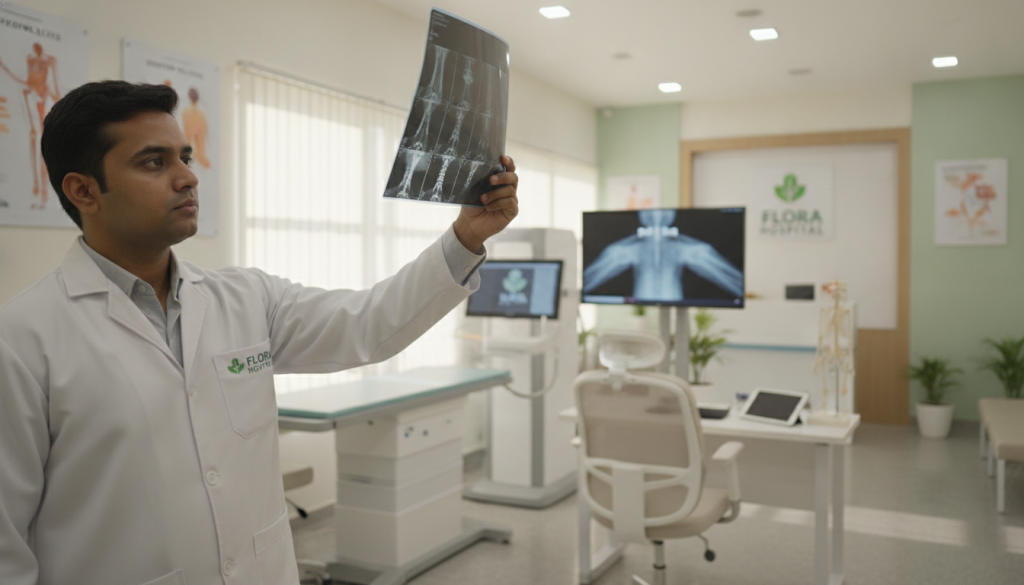
Using X-rays to Identify Bone Alignment and Break Patterns
X-rays remain the standard first test for bone imaging. They show the fracture’s exact location and whether the bone pieces align correctly. This quick, non-invasive test confirms the diagnosis and guides further care.
When CT or MRI Scans May Be Recommended
Doctors may order advanced imaging when X-rays do not show enough detail. CT scans show complex, multi-fragmentary breaks in three dimensions. MRI scans help the fracture doctor in Pune examine soft tissues, ligaments, or hidden stress fractures.
Assessing Open, Displaced, Comminuted, and Stress Fractures
Classifying the injury is an important step at a fracture clinic in Pune. Open fractures need quick care to prevent infection, while displaced fractures may need manual or surgical realignment. Comminuted fractures contain several bone pieces and may require specialized surgery for lasting stability.
Evaluating Nearby Joints, Tendons, Nerves, and Blood Vessels
A complete assessment examines more than the bone. Doctors check nearby areas to ensure that nerves and blood vessels remain intact. Protecting these structures is crucial for preserving limb function and sensation after healing.
How Diagnosis Influences the Treatment Plan
The diagnosis shows whether a patient needs a cast, brace, or surgery. The medical team combines physical findings with high-quality images to create a personal recovery plan. This evidence-based approach lowers risks and supports faster, safer healing.
| Diagnostic Tool | Primary Use | Best For |
|---|---|---|
| X-ray | Initial Screening | Bone alignment and simple breaks |
| CT Scan | Detailed Mapping | Complex or comminuted fractures |
| MRI | Soft Tissue View | Stress fractures and ligament damage |
Advanced Pune Fracture Treatment Options for Different Injuries
Effective fracture treatment in Pune matches each injury with the most suitable medical care. Orthopedic specialists assess bone stability and nearby soft tissue before choosing treatment. The right method helps bones heal with proper alignment and strength.
Non-Surgical Fracture Care for Stable Injuries
Splints, Casts, Braces, and Slings
Stable injuries keep bone pieces in place, so doctors often choose non-surgical care. Doctors use splints and casts to limit movement and support healing. Removable braces or slings may provide enough support while improving hygiene and comfort.
Pain Relief, Swelling Control, and Safe Immobilization
Managing discomfort is central to fracture care Pune protocols. Specialists may prescribe anti-inflammatory medicine and suggest elevation to reduce swelling. Steady immobilization lets the body focus on reconnecting the bone.
Closed Reduction for Misaligned Bones
When a bone is displaced without needing an incision, doctors perform a closed reduction. They manually move the bone pieces into their correct position under local or general anesthesia. A cast then holds the limb in place during the early stages of bone union.
Surgical Fracture Treatment for Unstable or Complex Breaks
Plates, Screws, Rods, and External Fixators
Complex or unstable fractures may need internal or external fixation to hold bones in place. Surgeons use plates, screws, and intramedullary rods to provide internal support and allow earlier movement. External fixators stabilize bones outside the skin when skin or muscle has severe damage.
Care for Open Fractures and Significant Soft-Tissue Damage
Open fractures occur when bone breaks through the skin and require immediate surgery to prevent infection. Surgeons clean the wound and stabilize the bone to protect nearby soft tissue. This approach to fracture treatment in Pune lowers long-term risks and supports healthier tissue recovery.
Specialized Care for Children, Older Adults, and Osteoporotic Patients
Growth-Plate Fractures in Children
Children need special care because their bones are still developing. Growth-plate injuries require careful treatment to prevent future growth problems. Pediatric specialists gently align the bone so it grows normally as the child matures.
Fall-Related Fractures and Bone Health in Older Adults
Older adults often suffer osteoporosis-related fractures because their bones become more fragile. Quality fracture care Pune clinics treat the break and address underlying bone-density problems. This approach helps prevent future falls and fractures while improving the patient’s quality of life.
| Treatment Type | Primary Goal | Common Hardware | Recovery Focus |
|---|---|---|---|
| Non-Surgical | Immobilization | Casts, Splints | Swelling Control |
| Closed Reduction | Alignment | None (Manual) | Stability Check |
| Surgical | Fixation | Plates, Rods | Early Mobility |
| Specialized | Growth/Density | Custom Braces | Bone Health |
Recovery, Rehabilitation, and Follow-Up After Fracture Care
Healing continues after your procedure at a fracture clinic in Pune. Bone stabilization comes first, but the next weeks protect long-term health and function.
Typical Healing Milestones and Factors That Affect Recovery Time
Bone healing follows stages, from inflammation to remodeling. Most patients improve greatly within six to twelve weeks, but full recovery may take longer after severe injuries.
Age, overall health, and the break’s location affect your pune fracture treatment timeline and return to daily life.
Physiotherapy to Restore Strength, Mobility, and Balance
Physical therapy supports effective recovery. A skilled therapist guides exercises that prevent muscle loss and joint stiffness.
Sessions help restore movement and improve balance. A personal plan keeps muscles strong enough to support the healing bone.
Nutrition and Lifestyle Measures That Support Bone Healing
Protein, Calcium, Vitamin D, and Hydration
Your body needs key nutrients to rebuild bone tissue. calcium and vitamin D support mineralization, while protein provides the structure for new bone cells.
- Protein: Found in lentils, eggs, and lean meats.
- Calcium: Abundant in dairy products and leafy greens.
- Vitamin D: Obtained through sunlight and fortified foods.
- Hydration: Essential for transporting nutrients to the injury site.
Smoking, Alcohol, and Other Factors That Can Delay Healing
Some habits can slow the body’s repair process. Smoking limits blood flow to bones and often delays healing.
Heavy alcohol use can reduce calcium absorption. Avoiding smoking and alcohol supports recovery.
Follow-Up Imaging and Recognizing Possible Complications
Infection, Nonunion, Malunion, and Persistent Pain
Follow-up visits let your specialist check bone alignment. Infection and nonunion, when bone fails to heal, need early treatment. Early care can prevent lasting problems.
| Complication | Common Sign | Action Required |
|---|---|---|
| Infection | Redness or fever | Immediate medical consult |
| Nonunion | Persistent instability | Advanced imaging |
| Malunion | Visible deformity | Orthopedic assessment |
When to Contact a Fracture Doctor in Pune After Treatment
Contact your fracture clinic in Pune after sudden, sharp pain or swelling that does not fade. Numbness or tingling in the affected limb also needs prompt evaluation.
Taking action helps your pune fracture treatment support lasting recovery. Keep every scheduled appointment to track your progress accurately.
Conclusion
Effective healing begins when you seek medical care instead of using home remedies. A qualified fracture specialist Pune can use precise diagnostic imaging to choose the best treatment for your injury.
Each break needs a unique approach based on the damage’s severity and location. Whether the injury is stable or complex and displaced, recovery requires a structured plan for your age and physical needs.
Stay in regular contact with your fracture doctor Pune to keep rehabilitation on track. Check-ups help your medical team monitor bone alignment and adjust physiotherapy exercises as your strength improves.
Do not ignore lasting pain or movement problems during healing. Contact a trusted orthopedic clinic today for a consultation and take control of your long-term bone health.
About Flora Multispeciality Hospital
Flora Multispeciality Hospital, located at Ravet, Pimpri-Chinchwad, Pune, provides expert healthcare services with advanced facilities and experienced specialists. The hospital offers comprehensive care for fracture treatment, orthopedic conditions, and faster recovery support with a patient-focused approach.
FAQ
Q: When should I seek immediate assistance from a fracture specialist in Pune?
A: Seek fracture care in Pune after a fall or impact if your limb looks deformed or cannot bear weight. Emergency evaluation is also needed for numbness, tingling, or a lost pulse, which may signal nerve or blood vessel damage. Patients from Ravet, Pimpri-Chinchwad, and nearby Pune areas can consult Flora Multispeciality Hospital, Ravet for expert fracture evaluation and treatment.
Q: What diagnostic procedures can I expect at a fracture clinic in Pune?
A: A reputable fracture clinic in Pune starts with a physical exam and injury history. Doctors usually confirm the diagnosis with X-rays showing the break pattern and bone alignment. For complex joint or soft-tissue injuries, a fracture doctor in Pune may order CT scans or MRI for treatment planning.
Q: Is surgery always necessary for fracture treatment in Pune?
A: Not all bone injuries need surgery. Doctors often manage stable fractures with non-surgical pune fracture treatment, including casts, splints, braces, or slings. Surgery usually treats unstable, displaced, or comminuted fractures with plates, screws, or rods, so bones heal in the correct position.
Q: How does pediatric fracture care differ from adult treatment?
A: Children need special care because their bones are still developing. A fracture specialist in Pune closely checks growth-plate fractures. Poor healing can cause unequal limb lengths or angular deformities. Children’s treatment often uses less invasive stabilization to support their rapid healing.
Q: Why is timely pune fracture treatment critical for long-term recovery?
A: Prompt treatment aligns the bone before natural healing begins. Delaying care or trying to “self-adjust” an injury can cause malunion (crooked healing) or nonunion (failure to heal). These problems may require complex corrective surgery later, but professional fracture care in Pune lowers these risks. Flora Multispeciality Hospital, Ravet, Pimpri-Chinchwad provides timely consultation and treatment guidance for fracture recovery.
Q: What role does nutrition and lifestyle play in bone healing?
A: Recovery depends on your body’s ability to rebuild bone tissue. A fracture doctor in Pune may recommend foods rich in Calcium, Vitamin D, and Protein. Avoid smoking and excessive alcohol because they restrict blood flow and delay bone mineralization.
Q: What are the signs of complications that require a follow-up with a fracture specialist in Pune?
A: Most patients recover well. Contact your fracture specialist in Pune for infection signs, such as redness, warmth, or discharge. Also report persistent or worsening pain or a sudden loss of sensation. Monitoring for nonunion or lasting stiffness is vital during post-treatment rehabilitation. Patients in Ravet, Pimpri-Chinchwad, Pune, and nearby areas can consult Flora Multispeciality Hospital for follow-up fracture care.
 Previous Post